The riad sits on Derb Sidi Bou Amar, a lane in the Riad Laarouss quarter in the north of the medina. Jemaa el-Fna is about ten minutes away on foot, the souks rather less than that, and the derb itself stays quiet — cars cannot reach it, which is most of the point.
A restored palace garden on Rue Mouassine, about 700 m away — the closest quiet green space to the door.
Ben Youssef Madrasa
A Koranic school for four centuries, where scholars came from across the Muslim world to study. The finest carved cedar and zellige in the city, a short walk north-east through the lanes.
Dar el Bacha
A pasha's palace turned museum, with the city's best-known coffee room in the courtyard.
Musée de Mouassine
A painted reception room hidden above the Mouassine fountain, roughly 900 m.
The souks
You are already at the top of them — the dyers, coppersmiths and carpet sellers run south from here.
Jemaa el-Fna
The great square, about ten minutes down through the souks, with the Koutoubia just beyond it.
Worth the walk
Further out.
Everything above is a stroll. These are worth setting aside a morning or an afternoon for — the distances are straight-line, so allow rather longer on foot through the medina.
Jardin Majorelle & the YSL Museum
About 1.7 km, outside the walls in Guéliz, and next door to one another — one trip, not two. Book the garden ahead; the queue is the only difficult part of it.
Bahia Palace, El Badi & the Saadian Tombs
All within a few hundred metres of each other in the southern medina, 2.4–2.5 km from us. Doing the three together is the obvious way round.
Dar Si Said
The museum of Moroccan weaving and craft, about 1.9 km, and a natural stop on the way to or from the palaces.
Finding us
The last hundred meters.
No car can reach the door — the derb is too narrow. Send us your arrival time and someone will meet you at the nearest point a taxi can stop and walk you the rest of the way.
It is only a few minutes on foot from there, but the lanes take some learning — and someone else carries the bags.
Marrakech Menara airport is about twenty minutes away by road. We can arrange the transfer if you would rather not haggle at the rank.
Arriving by car: park outside the walls and come in on foot. We will point you at the nearest car park when you tell us your plans.
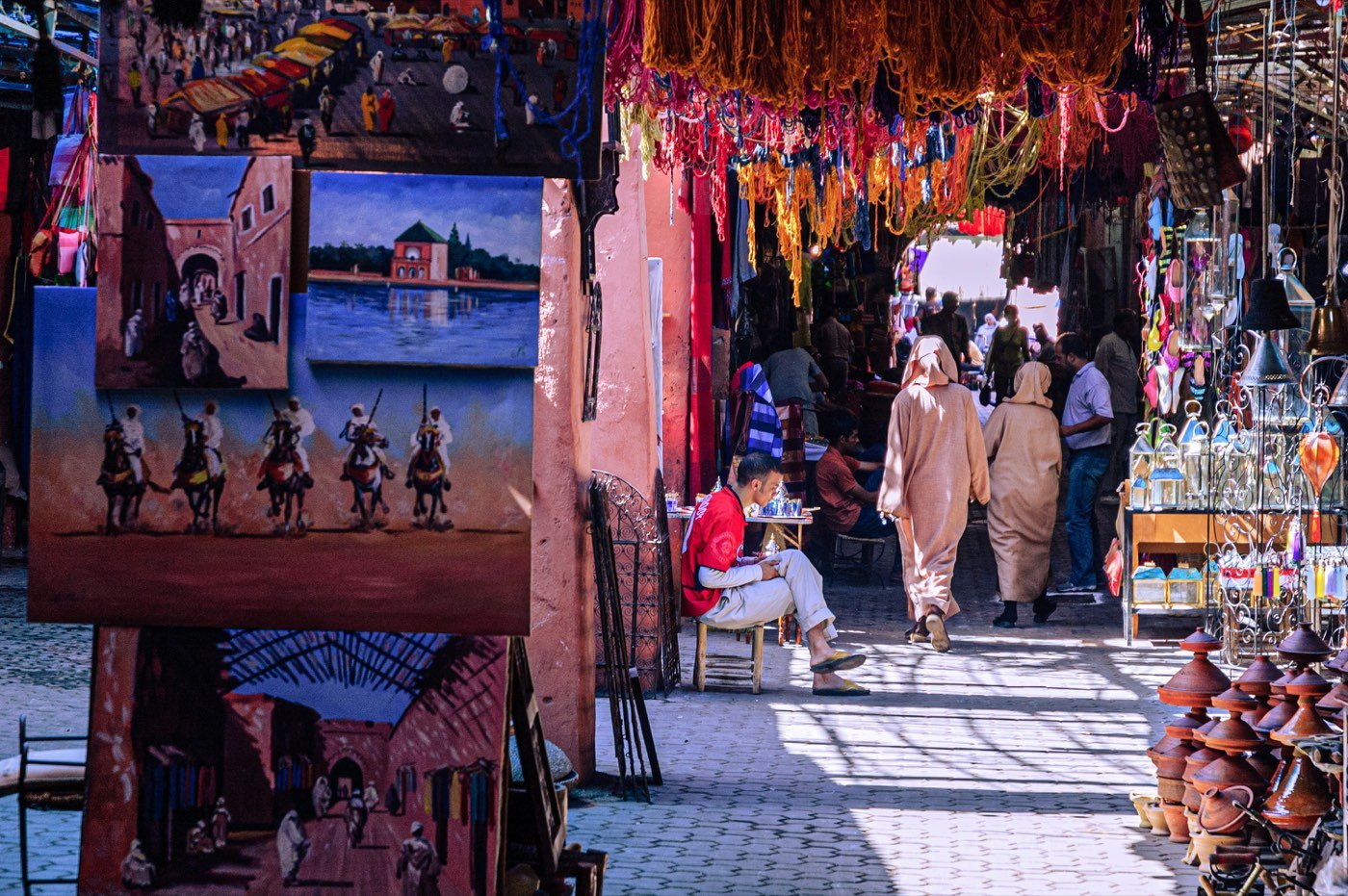
A morning with someone who knows which doorways are workshops — the dyers' lane, the coppersmiths, the men still carding wool by hand. The souks start at the end of our derb, so it begins at the door.
Into the Atlas
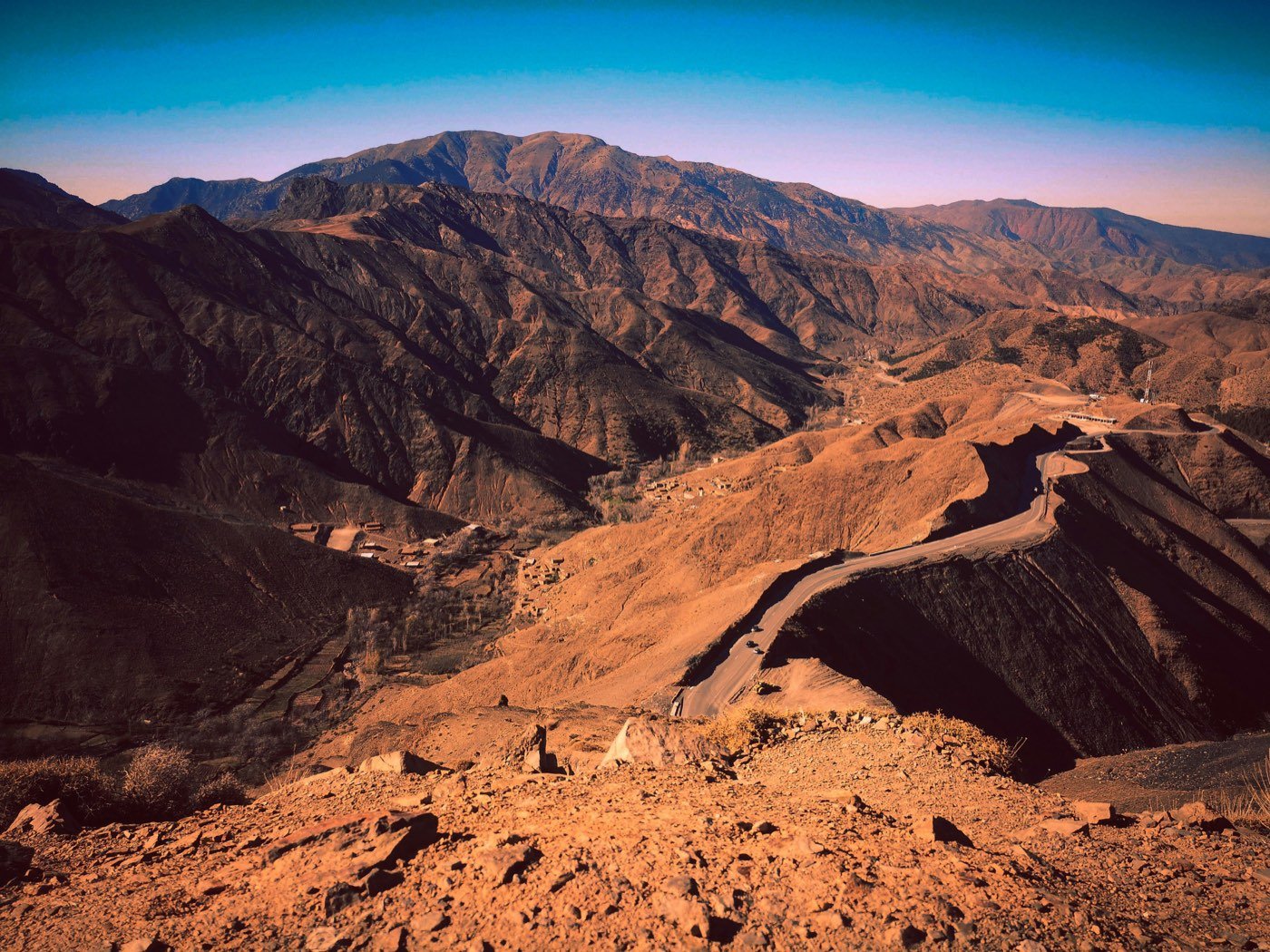
The mountains are an hour from the city and about fifteen degrees cooler. A day among the Berber villages of the Ourika or Imlil valleys, walking as much or as little as you want, and lunch by the water.
Agafay at sunset
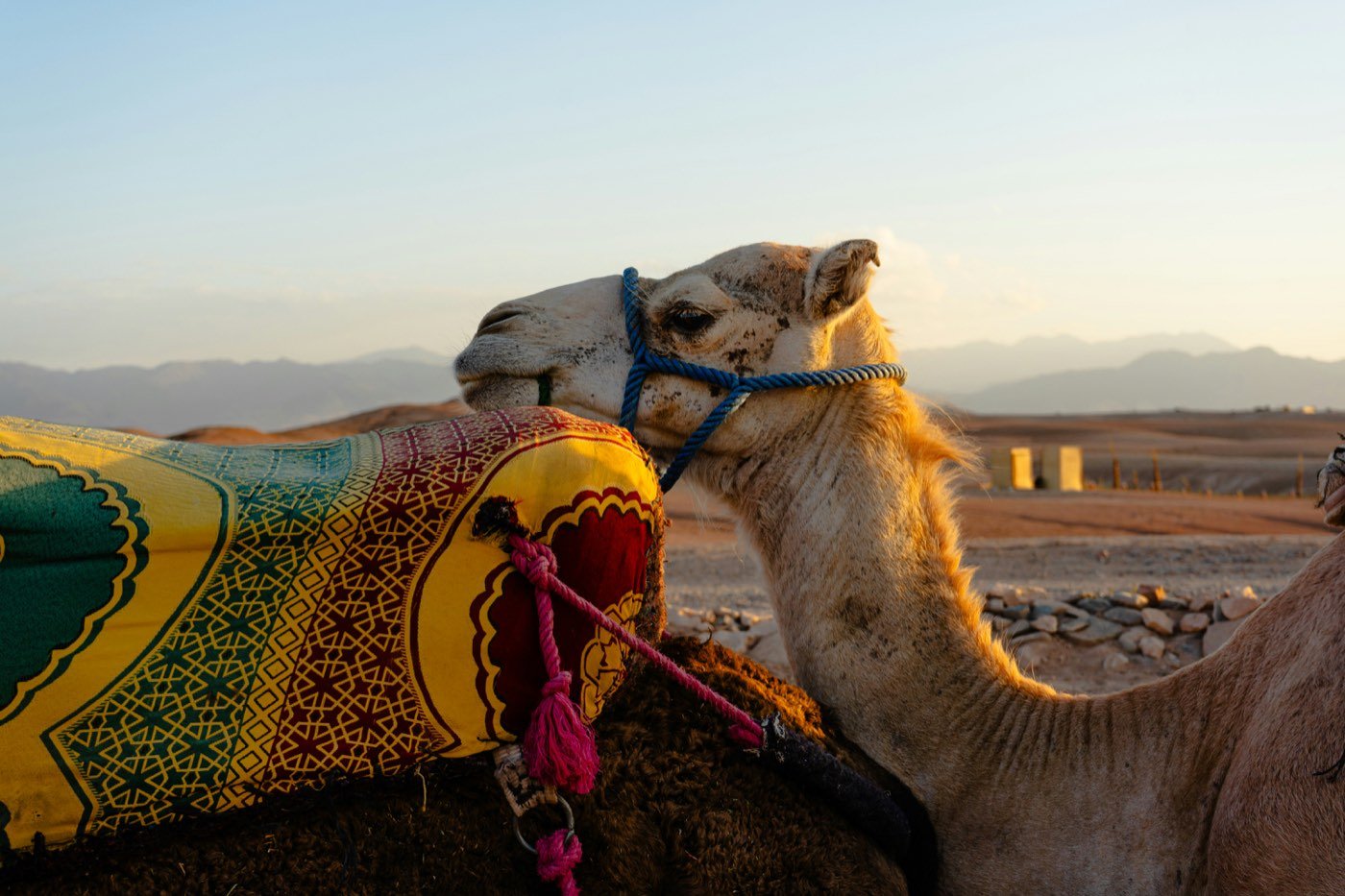
Not sand but stone desert, an hour from the gates, and empty in every direction. Go late, stay for dinner, and come back once the stars are out.